
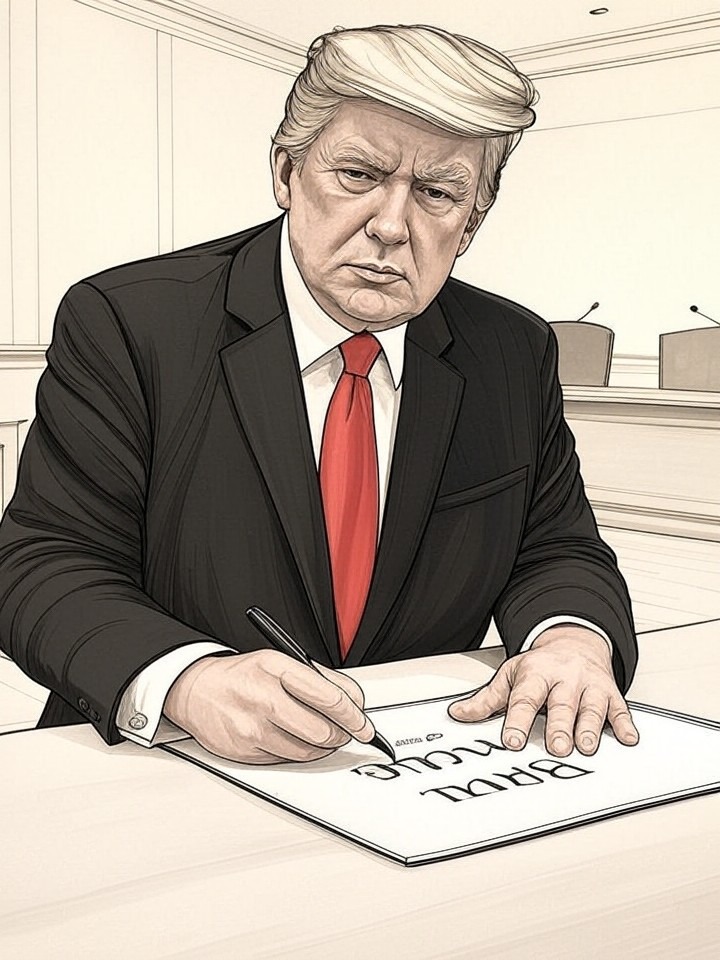
• Establishment of a new body for stability The administration successfully launched the "Board of Peace," a new international charter chaired by President Trump aimed at overseeing the reconstruction of Gaza. Officials stated that the body is intended to function alongside the United Nations to mobilize resources for long-term regional stability, with the potential to expand its scope to other global conflicts.
• Mobilization of high-profile leadership To operationalize the plan, the White House unveiled a "Founding Executive Board" composed of prominent international figures. The leadership team includes World Bank President Ajay Banga, former U.K. Prime Minister Tony Blair, Jared Kushner, and U.S. Secretary of State Marco Rubio, signaling a high-level commitment to the initiative's goals.
• Engagement from diverse international partners The signing ceremony was attended by representatives from a variety of nations, including Saudi Arabia, Turkey, Qatar, the United Arab Emirates, Hungary, and Argentina. In addition to securing this participation, the President engaged in high-level diplomacy at the summit, meeting with Ukrainian President Volodymyr Zelenskyy and announcing a framework deal regarding military access in Greenland.
How it may affect me
As a U.S. reader: Consumers could face higher retail prices for French wine after President Trump threatened significant tariffs in direct response to France refusing to join the new peace board.
U.S. strategic focus and resources may shift toward Middle East reconstruction as the President chairs a body tasked with mobilizing support for Gaza alongside international partners.
National defense posture in the Arctic could change due to a new framework deal with Greenland that aims to provide the U.S. military with access to the territory.
Traditional diplomatic partnerships may face strain as allies like the U.K. and France declined to join the initiative over concerns regarding its legal structure and Russian involvement.