
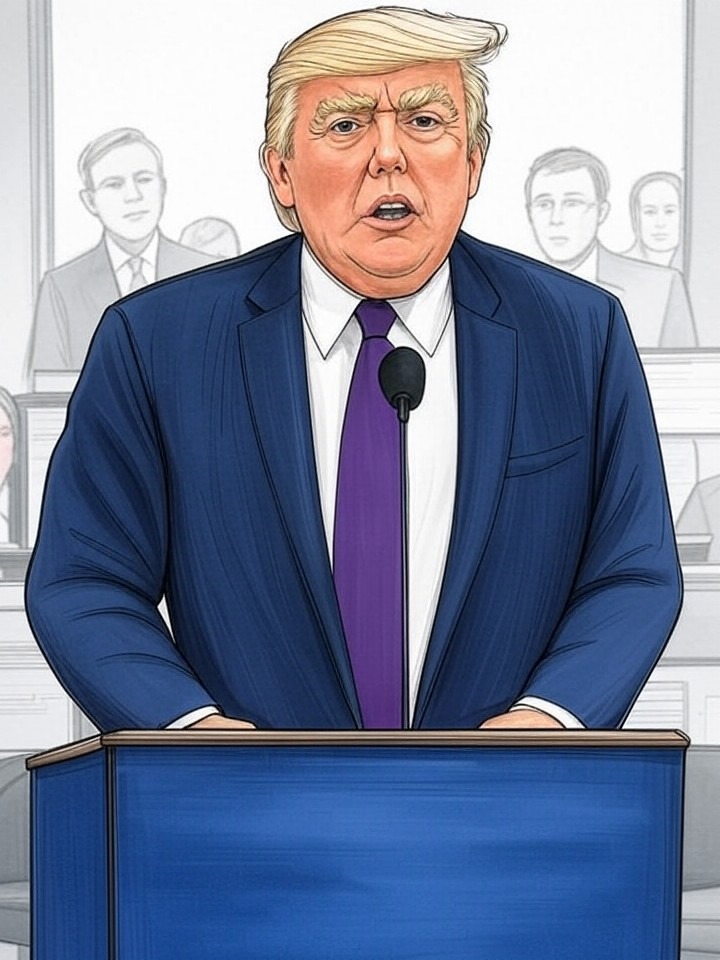
• Legal authority to deploy military force Dr. Sandeep Gopalan argues that under the Insurrection Act of 1807 and Title 10 of the U.S. Code, the president possesses the statutory authority to use military force to suppress unrest. He cites Supreme Court rulings and historical precedents to assert that the executive branch has the sole discretion to determine when such federal intervention is necessary to enforce the law.
• Characterization of events as organized violence Supporters of the administration's stance describe the demonstrations not as peaceful protests, but as a "calculated attack on the rule of law" and "organized acts of violence." Reports indicate that protesters have chased and blocked immigration enforcers, vandalized vehicles, and in one instance, struck an individual with a flagpole.
• Justification of federal law enforcement actions Regarding the controversy over a recent FBI raid, some accounts suggest the operation was conducted with a valid warrant. These reports indicate the action may have targeted a government contractor accused of mishandling classified information, rather than being an attack on the press.
How it may affect me
As a U.S. reader:
• Residents in Minnesota could encounter active military personnel acting as law enforcement if the President invokes the Insurrection Act to suppress specific demonstrations.
• Public protests involving obstruction or vandalism may face escalated federal intervention if the executive branch classifies such actions as "organized violence" rather than constitutionally protected speech.
• The scope of presidential power is being tested, potentially establishing legal precedents for when the military can be deployed domestically to enforce the rule of law.
• Legal protections for journalists and government contractors may be clarified following debates over whether recent federal raids constituted valid investigations or violations of the Privacy Protection Act.