
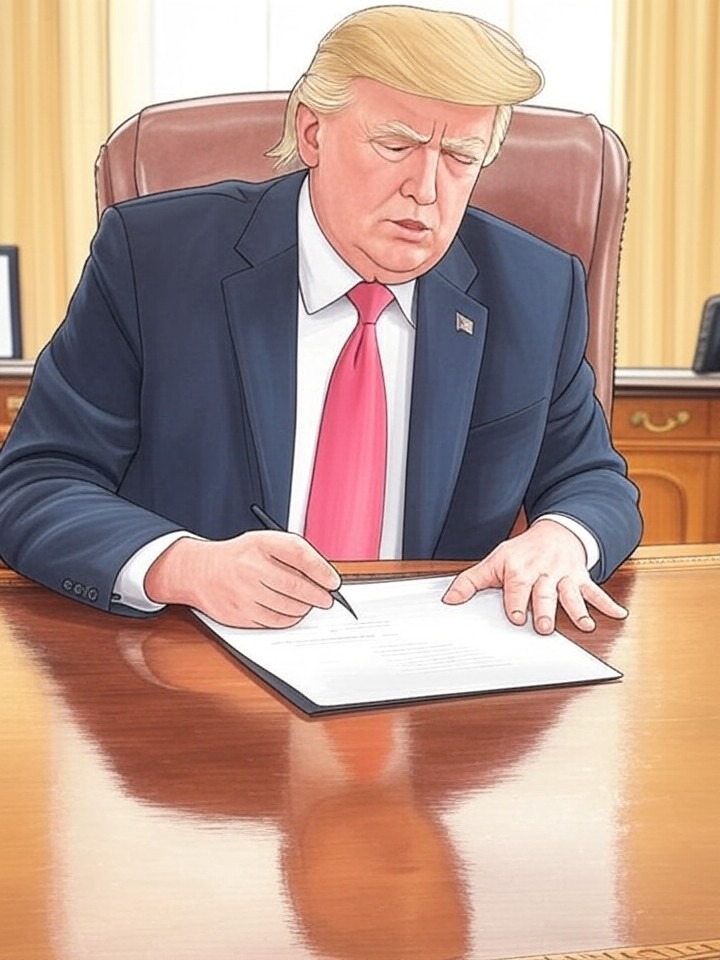
• Implementation of aggressive government reforms and executive action The White House highlights a decisive use of executive authority, pointing to the signing of over 225 executive orders—more than the President’s entire first term count. Additionally, the administration touts the establishment of the Department of Government Efficiency (DOGE) under Elon Musk, which successfully oversaw the reduction of hundreds of thousands of federal positions to reshape government operations.
• Achievement of key national security and immigration goals Officials emphasize a "peace through strength" strategy, citing the military strikes on Iranian facilities, the capture of Venezuelan President Nicolás Maduro, and record low border encounters as evidence of success. The administration also reports substantial enforcement numbers, including over 622,000 deportations, fulfilling a central focus of the President's agenda.
• Delivery on campaign promises amid stabilizing economic indicators Supporters point to falling gas prices and an inflation rate of 2.7% as proof that the President’s economic policies are working for consumers. The White House asserts that it has delivered on all major campaign pledges, maintaining an approval rating that reaches up to 45% in some national polling.
How it may affect me
As a U.S. reader: You may experience relief from falling gas prices and 2.7% inflation, though finding employment could become harder as job growth slows and unemployment sits at 4.4%.
Interactions with federal agencies may change following the reduction of hundreds of thousands of government positions overseen by the new Department of Government Efficiency.
You might witness increased social unrest or protests in your community reacting to aggressive immigration enforcement tactics and specific incidents involving federal agents.
Business operations and consumer prices face uncertainty as sweeping new trade tariffs undergo legal review by the Supreme Court.
Financial markets and borrowing conditions could fluctuate due to reported friction and subpoenas served to the Federal Reserve as part of an administration pressure campaign.