
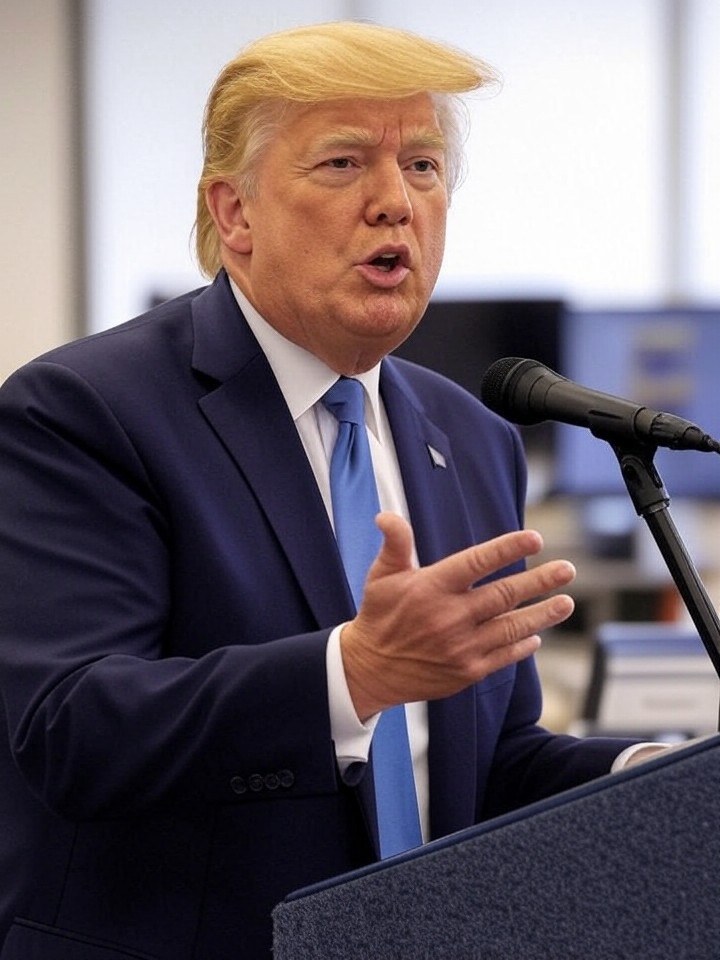
Trump Threatens Tariffs on European Allies Amid Dispute Over Greenland Purchase

Illustration for: Trump Threatens Tariffs on European Allies Amid Dispute Over Greenland Purchase
AI-generated illustration. Visual interpretation does not represent real individuals or scenes.

THE BARE STORY

President Donald Trump has threatened to impose tariffs on several European nations as part of an ongoing effort to bring Denmark to the negotiating table regarding a potential U.S. purchase of Greenland. The administration has proposed 10% tariffs on goods from countries including Denmark, the United Kingdom, Norway, Sweden, France, Germany, the Netherlands, and Finland. Reports indicate that these penalties could increase to 25% by June 1 if a deal for the autonomous Arctic territory is not reached.

The administration argues that acquiring Greenland is critical for enhancing national security, with President Trump claiming that Denmark is unable to handle a "Russian threat" in the region. Conversely, a former U.S. ambassador to Denmark stated there is "no truth" to claims regarding Russian or Chinese encroachment. While National Economic Council Director Kevin Hassett urged for "cooler heads to prevail," suggesting the President’s stance is a negotiating tactic, the diplomatic fallout has been immediate. Danish government representatives reportedly cancelled their attendance at the World Economic Forum in Davos due to the dispute.

European leaders have sharply criticized the move. Danish Prime Minister Mette Frederiksen asserted that Europe would not be blackmailed, while British Prime Minister Keir Starmer stated that levying tariffs on allies is "completely wrong," emphasizing that Greenland's future is a decision for its people and Denmark. Protests against the acquisition took place in Nuuk, Greenland, shortly before the tariff announcement.

In Washington, reaction is divided along party lines. A group of House Democrats, led by Representative Gabe Amo, introduced the "NO NATO for Purchase Act" to prohibit the use of federal funds for acquiring NATO-protected territory. Meanwhile, a separate GOP-led bill was introduced to authorize the President to acquire Greenland and place it on a path to statehood. Following meetings with U.S. officials, including Vice President JD Vance and Secretary of State Marco Rubio, Danish officials noted that perspectives on the issue continue to differ.

Same Facts. Different Perspectives.

Two AI models. Two viewpoints. One factual foundation.

• Acquisition viewed as a national security necessity The administration argues that purchasing Greenland is critical for enhancing U.S. national security interests. President Trump has claimed that Denmark is unable to adequately handle a "Russian threat" currently present in the region.

• Economic tariffs utilized as a negotiating tactic To bring Denmark to the negotiating table, the administration has threatened tariffs of 10% on several European nations, potentially rising to 25% by June. National Economic Council Director Kevin Hassett suggested that the President's stance may be a negotiating tactic, though he urged for "cooler heads to prevail."

• Legislative efforts to authorize statehood Support for the acquisition has materialized within Congress through a GOP-led bill. This legislation seeks to authorize the President to acquire the autonomous territory and officially place it on a path to statehood.

How it may affect me

As a U.S. reader:

• Consumers could face price increases on goods from eight European countries, including the UK and Germany, if the administration enacts tariffs of 10% to 25%.

• Conflicting bills in Congress will determine if taxpayer funds are used to acquire Greenland for potential statehood or if such spending is prohibited by law.

• Diplomatic relations with key European allies could deteriorate, potentially affecting international cooperation, after leaders rejected the administration's tariff threats as coercion.

• Public discourse on national security may shift focus to the Arctic, as the administration argues territorial expansion is necessary to counter Russian threats in the region.

Read the story at

Note: All TheBareNews content is AI-generated. For additional context, reporting, and updates, you are invited to explore the news outlets linked above.