
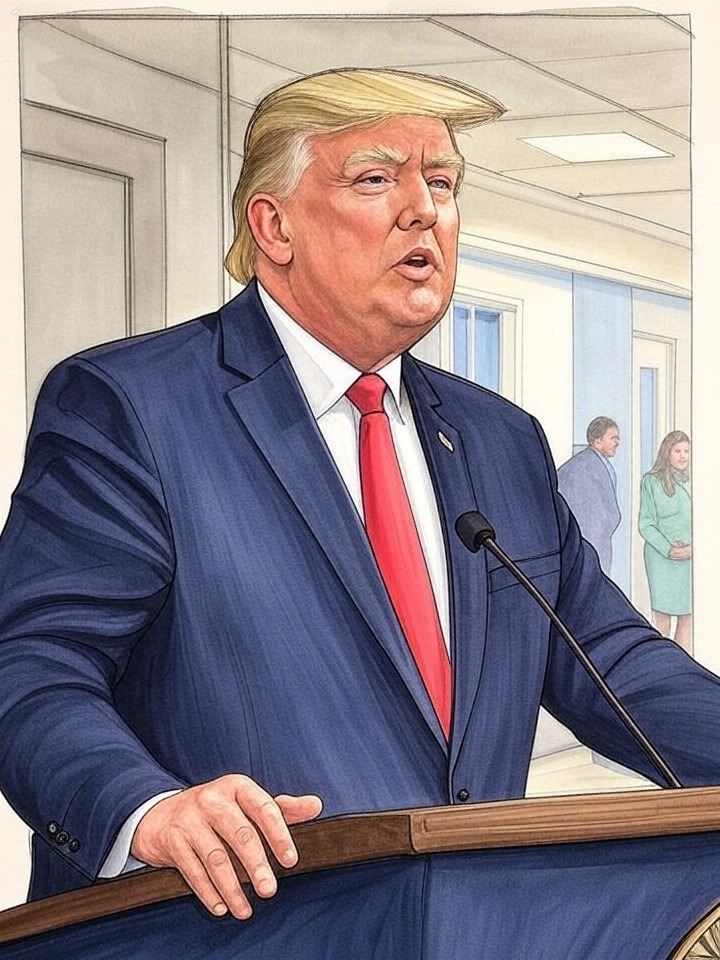
• Engagement with interim leadership President Trump has chosen to engage with interim president Delcy Rodríguez, identifying her as a "terrific person" and noting progress on a bilateral agenda. This engagement occurs despite Rodríguez’s history as the former vice president under the ousted leader Nicolás Maduro.
• Skepticism regarding Machado’s political viability The administration has refrained from endorsing María Corina Machado to lead the transition, with President Trump asserting that she lacks the necessary support within the country to govern effectively. Supporting this cautious approach, Secretary of State Marco Rubio stated that the strategy is designed to avoid repeating previous foreign policy mistakes.
• Active control of energy resources While conducting diplomatic talks, the U.S. is actively managing Venezuela's economic assets, confirmed by the Pentagon’s seizure of a sixth oil tanker. Officials report that the U.S. has commenced selling Venezuelan crude, with an initial transaction of $500 million completed and plans to sell up to 50 million barrels.
How it may affect me
As a U.S. reader: The immediate sale of up to 50 million barrels of Venezuelan crude adds significant supply to the energy market, which could potentially influence domestic fuel prices.
Active military involvement is confirmed by the Pentagon seizing oil tankers, signaling that U.S. armed forces are currently deployed to enforce control over foreign energy assets.
The generation of $500 million from initial oil sales indicates a new revenue stream managed by the government, derived directly from the seizure and management of foreign resources.
Diplomatic engagement with Venezuela's interim leadership aims to avoid past foreign policy errors, suggesting a strategic approach intended to stabilize the region without relying on opposition figures.