
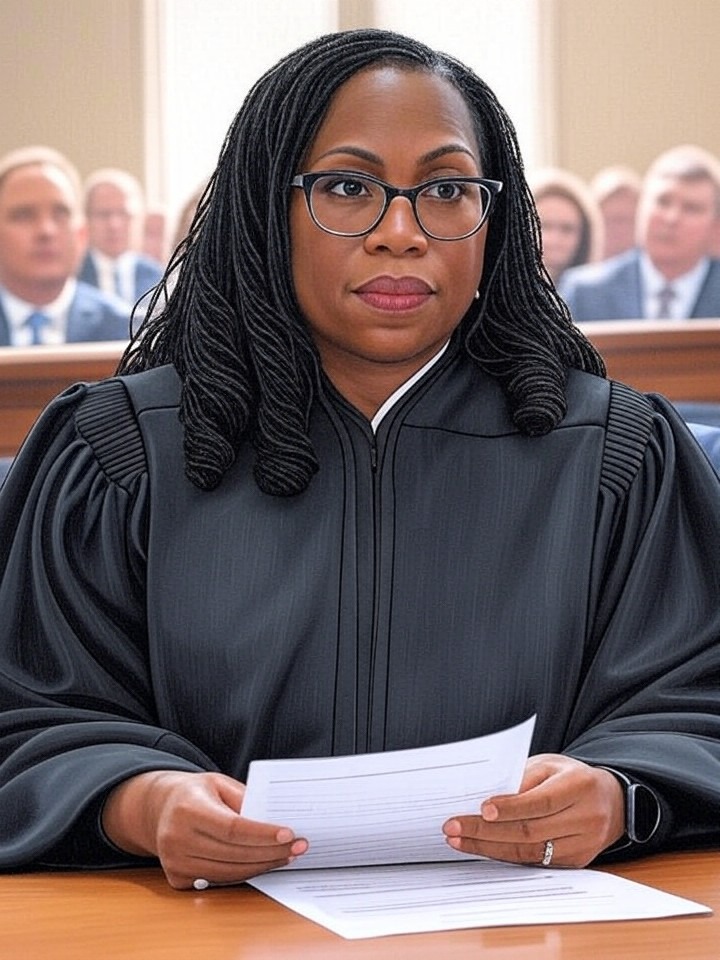
Illustration for: Supreme Court hears arguments on Idaho and West Virginia transgender sports bans
AI-generated illustration. Visual interpretation does not represent real individuals or scenes.

Supreme Court hears arguments on Idaho and West Virginia transgender sports bans

2026-01-15

The BareStory

The Supreme Court heard oral arguments on Tuesday, January 13, 2026, regarding state laws in Idaho and West Virginia that prevent transgender athletes from competing in sports categories designated for women and girls. The cases, *Little v. Hecox* and *B.P.J. v. West Virginia*, center on whether restricting transgender girls from female sports teams violates Title IX and the Constitution’s equal protection clause.

During the hearing, Justice Ketanji Brown Jackson questioned whether the statutes constitute discrimination based on transgender status. Idaho Solicitor General Alan Hurst defended his state's Fairness in Women's Sports Act, arguing the law relies on biological sex classifications rather than gender identity and is intended to preserve women's sports for women. In the West Virginia case, Solicitor General Michael Williams argued the court should focus on the state's authority to distinguish between sexes in athletics. Conversely, an attorney from the ACLU, representing a transgender teenager, contended that the bans deny equal protection and that valid distinctions should not exclude transgender girls who identify as female.

Outside the court, athletes and activists associated with the "Save Women's Sports" movement gathered to react to the proceedings. Madison Kenyan and Lainey Armistead, athletes involved in the defense of the laws, expressed optimism that the justices would protect the integrity of women's sports. However, other attendees voiced frustration with the lines of questioning; some activists criticized the justices' use of terminology such as "cisgender" and "assigned at birth," while others argued that the focus of the hearing treated female athletes as an "afterthought."

The Supreme Court is expected to issue a ruling by the summer. The decision could affirm or overturn similar restrictions on transgender athletes currently enacted in approximately two dozen states.

Left Perspective

  • The restrictions may violate constitutional equal protection guarantees
  • Excluding athletes based on status constitutes potential discrimination
  • Sports categories should include athletes based on gender identity

Right Perspective

  • The legislation relies on biological sex rather than gender identity
  • States possess the authority to distinguish between sexes in athletics
  • Protecting the category of women’s sports is the primary priority

How it may affect me

As a U.S. reader:

A Supreme Court ruling expected this summer could determine the validity of laws in approximately two dozen states that currently restrict transgender athletes from competing in female sports categories.

The decision will clarify whether states have the authority to regulate athletics based on biological sex or if such distinctions violate Title IX and constitutional equal protection guarantees.

Athletic programs may need to revise eligibility policies depending on whether the court prioritizes preserving women’s sports for biological females or ensuring inclusion based on gender identity.

Read the story at