
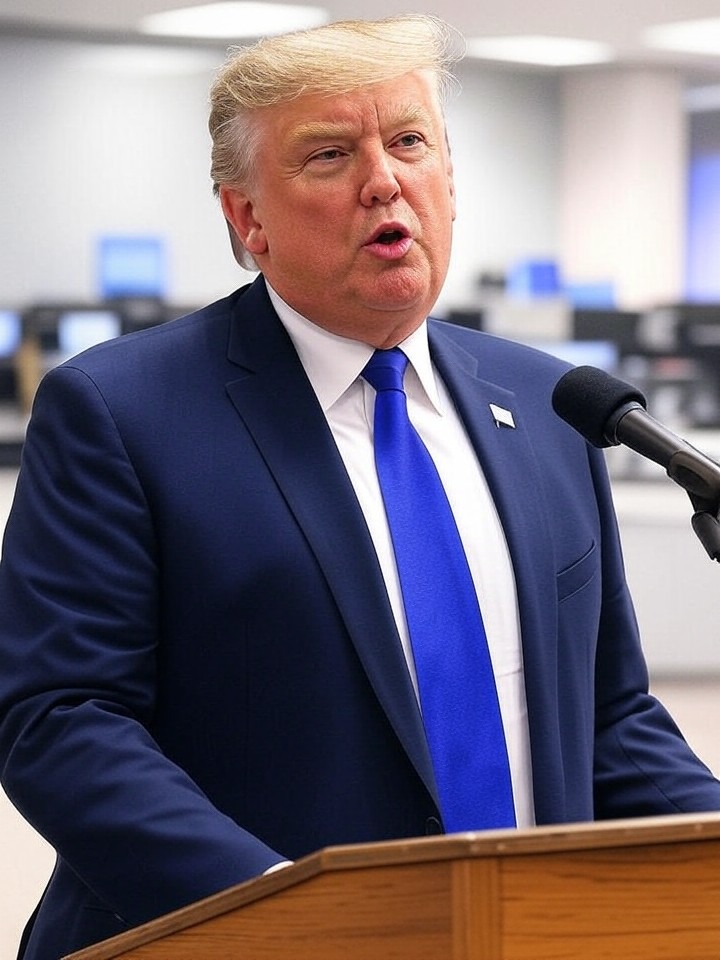
• Necessity for national security President Donald Trump has asserted that acquiring Greenland is essential for U.S. national security, specifically linking the acquisition to the development of a "Golden Dome" missile defense shield. The administration justifies this requirement by citing alleged threats posed by Russia and China.
• Insistence on full control Prior to the discussions, the President stated that any outcome resulting in less than U.S. control of the territory would be "unacceptable." While the White House meeting ended without a resolution, officials maintained the position that the acquisition is necessary to address the administration's strategic goals.
• Commitment to ongoing engagement Despite acknowledging a "fundamental disagreement" regarding the ownership of the territory, U.S. officials agreed to keep diplomatic channels open. The parties have decided to establish a high-level working group to continue the dialogue concerning Greenland's future status.
How it may affect me
As a U.S. reader:
National security policy may pivot toward developing a "Golden Dome" missile shield, which the administration claims is essential for defense against Russia and China and requires controlling Greenland.
You may see increased military coordination among European allies, as NATO members deploy troops to Greenland for "Operation Arctic Endurance" following Denmark's request during the diplomatic standoff.
Existing defense capabilities in the Arctic will likely remain unaffected in the short term, as the U.S. retains access to the Pituffik Space Base through a standing 1951 agreement.
Future relations with Denmark will depend on the progress of a new high-level working group, which aims to resolve fundamental disagreements over the administration's demand for full ownership.