
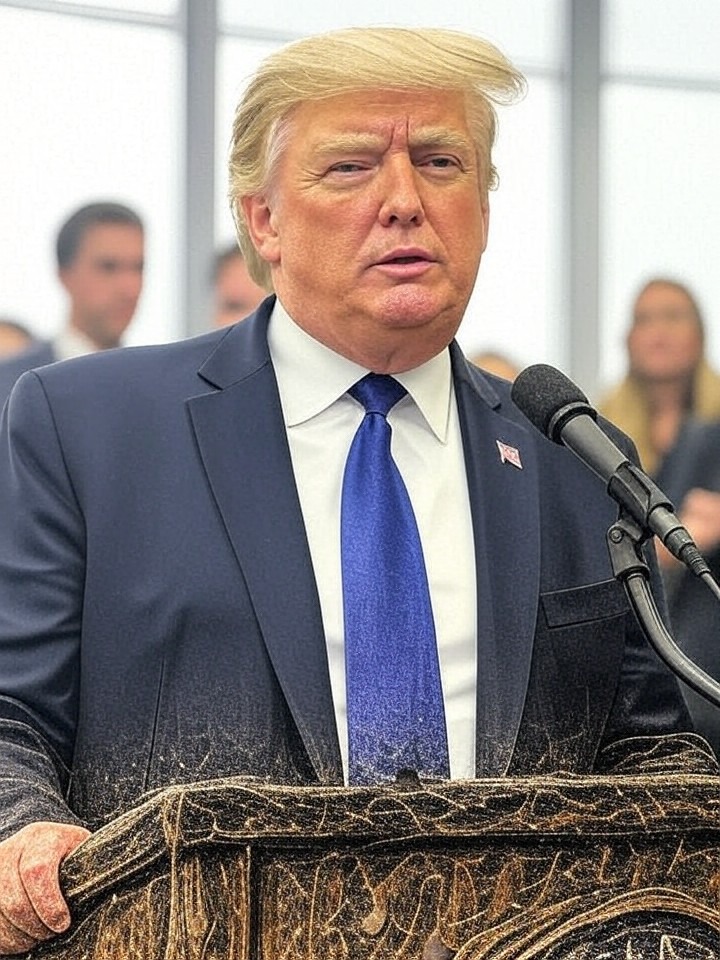
AI-generated illustration. Visual interpretation does not represent real individuals or scenes.
White House Officials Host Danish and Greenlandic Ministers Amid Dispute Over Territory
2026-01-14
The BareStory
Vice President JD Vance and Secretary of State Marco Rubio met with foreign ministers from Denmark and Greenland at the White House on Wednesday. The high-level talks occurred amid ongoing tensions regarding President Donald Trump’s stated desire for the United States to acquire Greenland, a semi-autonomous territory of Denmark.
President Trump has characterized the acquisition as vital for national security, asserting on social media that the territory is at risk of influence from Russia or China. According to reports, the President stated on Sunday that while he would prefer a diplomatic deal, the U.S. intends to secure Greenland "one way or the other." Administration officials have indicated that all options are being considered, though Secretary Rubio has reportedly downplayed the possibility of using military force.
Leaders in both Denmark and Greenland have repeatedly rejected the U.S. overtures, declaring that Greenland is "not for sale." Greenland’s Prime Minister Jens-Frederik Nielsen stated earlier this week that the territory remains aligned with Denmark. Danish Prime Minister Mette Frederiksen described the pressure from the U.S. as "completely unacceptable" coming from a close ally. Frederiksen further warned that any military move to seize the territory would effectively end the NATO alliance, noting that Denmark is a member state entitled to mutual defense.
Left Perspective
Acquisition is deemed essential for national security against foreign influence
The administration is determined to secure the territory through various means
Officials have attempted to temper concerns regarding military action
Right Perspective
Leaders unequivocally reject the notion that the territory is for sale
Pressure from the United States is viewed as a breach of allied norms
Military moves would threaten the existence of the NATO alliance
Left Perspective
• Acquisition is deemed essential for national security against foreign influence
President Trump has characterized the acquisition of Greenland as vital for U.S. security interests. He has specifically asserted on social media that the territory is currently at risk of falling under the influence of Russia or China, necessitating American intervention.
• The administration is determined to secure the territory through various means
While President Trump stated a preference for a diplomatic deal, he made clear that the U.S. intends to acquire the territory "one way or the other." Administration officials have indicated that all options are currently under consideration to achieve this goal.
• Officials have attempted to temper concerns regarding military action
Despite the broad range of options being considered, Secretary of State Marco Rubio has reportedly downplayed the possibility of using military force. This perspective suggests a focus on securing the territory while managing the specific methods used to achieve that outcome.
Right Perspective
• Leaders unequivocally reject the notion that the territory is for sale
Officials from both Denmark and Greenland have repeatedly dismissed U.S. overtures, declaring that Greenland is "not for sale." Greenland’s Prime Minister Jens-Frederik Nielsen affirmed earlier this week that the semi-autonomous territory remains firmly aligned with Denmark.
• Pressure from the United States is viewed as a breach of allied norms
Danish Prime Minister Mette Frederiksen described the pressure to sell the territory as "completely unacceptable," particularly coming from a close ally. This stance highlights the diplomatic friction caused by the U.S. administration’s persistence in pursuing the acquisition.
• Military moves would threaten the existence of the NATO alliance
Prime Minister Frederiksen warned that any U.S. military attempt to seize Greenland would effectively end the NATO alliance. She noted that Denmark is a member state entitled to mutual defense, implying that a military move by the U.S. would violate the core tenets of the security pact.
How it may affect me
As a U.S. reader:
The U.S. membership in and reliance on the NATO alliance could be threatened if the administration pursues military action, as Denmark warned this would effectively end the pact.
Public resources and defense priorities may shift toward the Arctic, as the President has declared acquiring Greenland vital for national security against Russian or Chinese influence.
Relations with traditional European allies may deteriorate, as Danish leaders have labeled the pressure to sell the territory unacceptable and a breach of norms between close allies.
Citizens face uncertainty regarding foreign policy methods, as the President insists on acquisition "one way or the other" while officials simultaneously downplay the use of military force.