
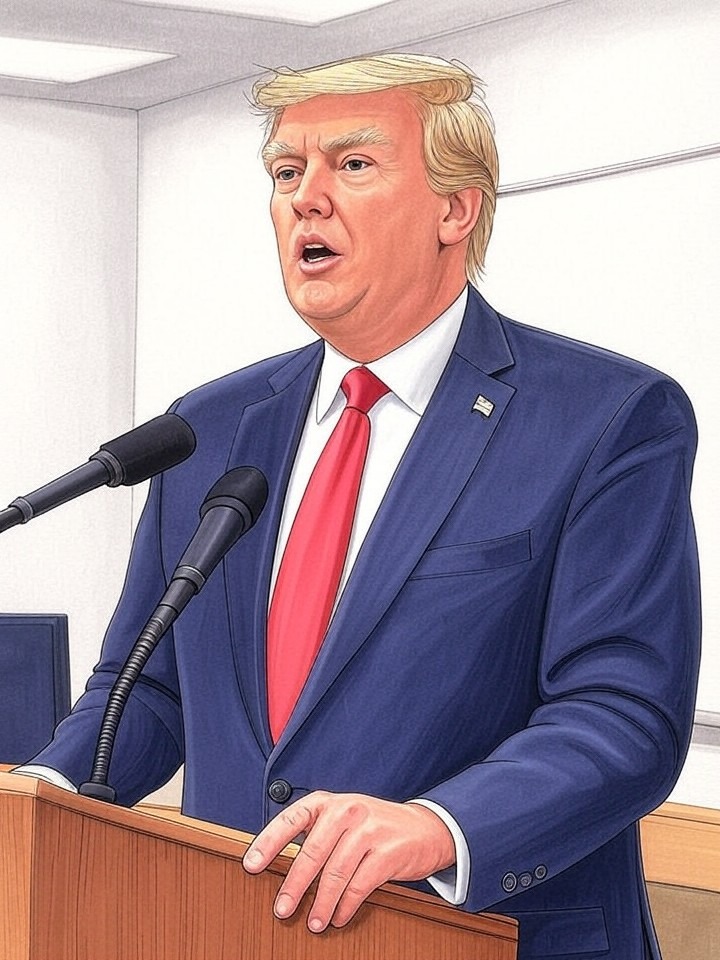
• Enforcement against criminal activity The Trump administration characterizes the seizure of Nicolás Maduro not as a political intervention, but as a necessary law enforcement action against a "cartel leader." Following the raid, Maduro and his wife were transported to federal court in New York, where they faced drug charges and entered pleas of not guilty.
• Executive authority without congressional approval Secretary of State Marco Rubio defended the operation's legality, asserting that the raid did not constitute a full-scale invasion. Consequently, the administration argued that the action fell within executive powers and did not require prior approval from Congress.
• Temporary stewardship of Venezuela Following the operation, President Trump declared himself the "Acting President of Venezuela," stating the U.S. would oversee the nation until a transition could be secured. In a subsequent interview, the President suggested that this period of U.S. oversight would likely continue for more than a year.
How it may affect me
As a U.S. reader:
You may witness intensified debates in Congress regarding constitutional war powers and whether the executive branch requires legislative approval for foreign interventions.
You can expect a high-profile federal legal proceeding on domestic soil as the Venezuelan leader and his wife face drug trafficking charges in New York.
Diplomatic relations with global powers may become strained, as Chinese media have explicitly criticized the operation and suggested it was motivated by control over oil resources.
Public resources may be committed to foreign administration for an extended period, given the President's suggestion that U.S. oversight of Venezuela will likely last over a year.