
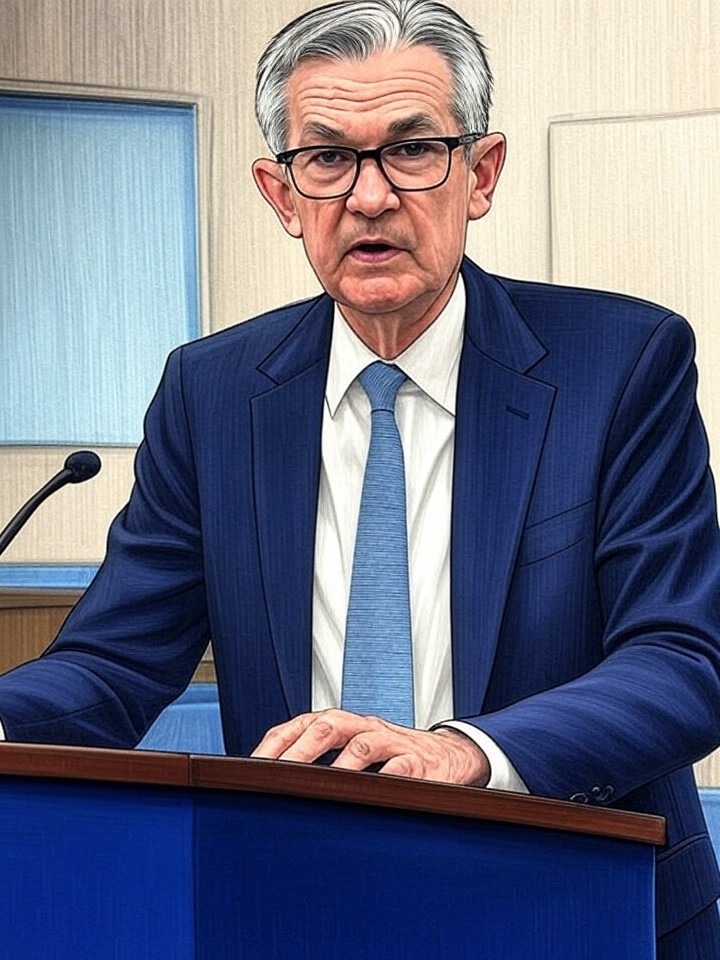
• The Department of Justice is investigating allegations of false remarks to Congress. The criminal probe reportedly focuses on claims that Federal Reserve Chair Jerome Powell made untrue statements to lawmakers regarding a renovation project at the central bank's headquarters. President Donald Trump has explicitly denied any involvement in the initiation of this investigation.
• The President maintains that current interest rates are excessive. President Trump reiterated his long-standing criticism of the Federal Reserve, stating that interest rates remain "far too high." This stance aligns with his previous critiques of the central bank for keeping rates at elevated levels.
• Proposals have been introduced to cap credit card interest rates for consumers. In a separate development impacting the financial sector, President Trump advocated on social media for a one-year, 10% limit on credit card interest rates. This policy suggestion, combined with the news of the investigation, contributed to a decline in bank stocks.
How it may affect me
As a U.S. reader:
• You may experience value fluctuations in retirement accounts or stock portfolios as markets react with volatility and bank stocks decline following the probe announcement.
• You could see changes in borrowing costs if the administration pursues the President's suggestion to cap credit card interest rates at 10 percent for one year.
• Your purchasing power relative to foreign currencies may decline as the U.S. dollar weakens, while the value of assets like gold and silver may increase.
• You might face higher inflation and weaker economic growth in the long term if political pressure influences monetary policy, according to warnings from former Federal Reserve leaders.