
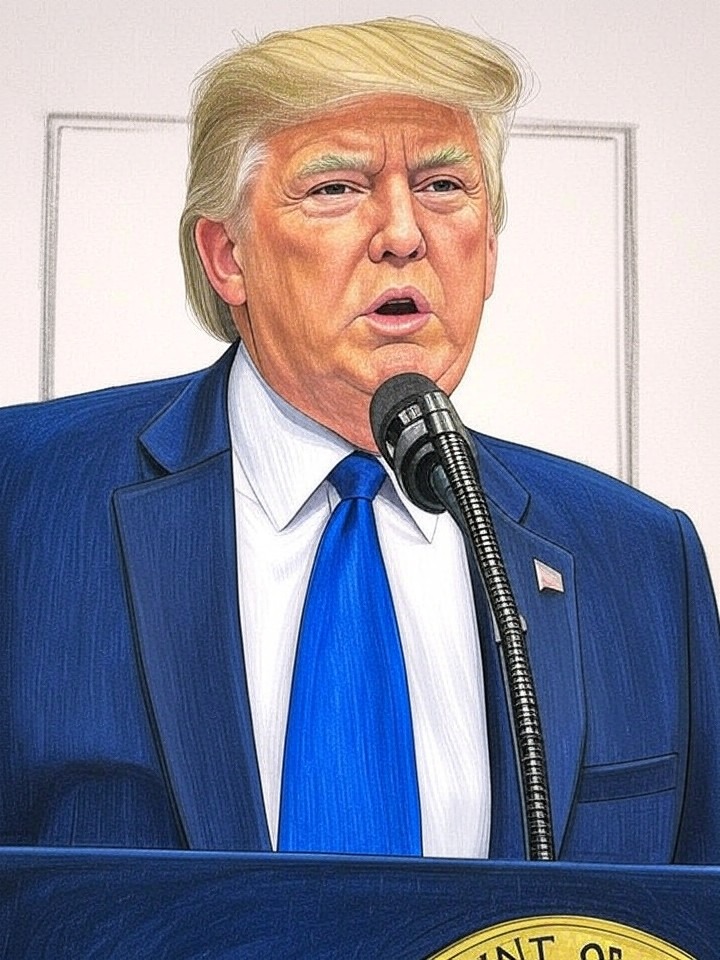
• Revival of a long-standing principle President Trump has explicitly returned the 1823 Monroe Doctrine to prominence after it had been largely forgotten in presidential discourse following World War II. The President stated that this foreign policy principle is now being applied to frame his administration’s approach to the recent situation in Venezuela.
• Prevention of foreign interference The doctrine originated as a message warning European powers to refrain from interfering in the Americas. In 1904, President Theodore Roosevelt expanded this policy to argue for preemptive U.S. action specifically designed to prevent European intervention and address instability in Central America and the Caribbean.
• Protection of national interests Historically, the policy evolved under various administrations to justify actions deemed necessary for U.S. interests. According to historian Jay Sexton, the Roosevelt Corollary was utilized to protect U.S. business interests, leading to the deployment of military forces in roughly half a dozen nations.
How it may affect me
As a U.S. reader: You may witness a shift in foreign policy where the administration uses this principle to justify preemptive actions or interventions to address instability in the Americas.
Renewed application of this doctrine could lead to military deployments intended to protect U.S. business and national interests, mirroring historical precedents in the region.
Potential military operations based on this policy carry the risk of service member casualties, as past interventions resulted in hundreds of military deaths.
Future interventions may prove politically controversial, given that historical operations under this doctrine were characterized as unpopular conflicts with high civilian casualties.