
Trump and Petro plan White House meeting following call to de-escalate tensions

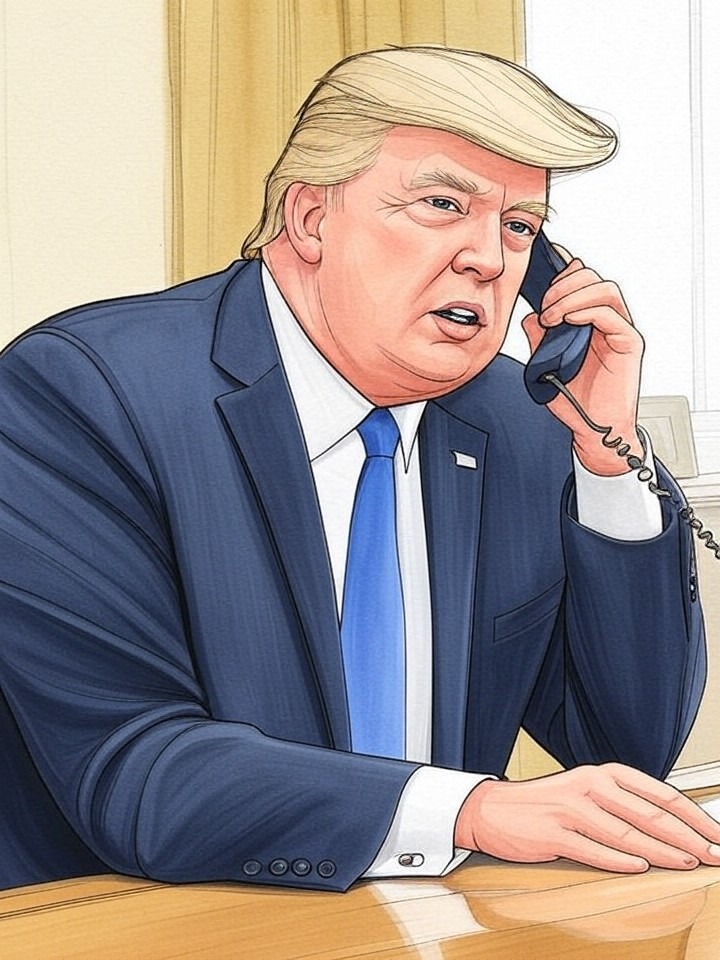
Illustration for: Trump and Petro plan White House meeting following call to de-escalate tensions
AI-generated illustration. Visual interpretation does not represent real individuals or scenes.

THE BARE STORY

U.S. President Donald Trump and Colombian President Gustavo Petro spoke by telephone on Wednesday, moving to lower diplomatic tensions that had spiked following the U.S. military’s capture of former Venezuelan President Nicolás Maduro. As a result of the conversation, the two leaders agreed to schedule a future meeting at the White House.

The call came after a period of escalating rhetoric. Following the operation in Venezuela, President Trump had suggested that Colombia could be the next focus of U.S. attention, with reports indicating he characterized the country as a "sick man" and alluded to potential military operations. In response, President Petro denounced the U.S. actions in the region as aggression and publicly stated he would defend his country’s sovereignty if necessary.

Following Wednesday’s discussion, President Trump wrote on social media that he appreciated President Petro’s call and tone, noting that the Colombian leader explained his position regarding drug enforcement and other disagreements. President Petro stated that the two discussed their differing views on U.S.-Latin American relations, expressing a preference for economic partnership in energy over resource extraction.

Colombian officials described the exchange as a positive shift in the relationship. The diplomatic friction follows months of accusations from the Trump administration, which has alleged that the Colombian government failed to contain cocaine production. Previously, the U.S. Treasury Secretary announced sanctions against President Petro, claiming he allowed cartels to flourish, while Petro has been a vocal critic of U.S. military policy in the region.

Same Facts. Different Perspectives.

Two AI models. Two viewpoints. One factual foundation.

• Concerns regarding drug enforcement and cartel activity The administration has directed accusations at the Colombian government for allegedly failing to contain cocaine production. Previously, the U.S. Treasury Secretary announced sanctions against President Petro, claiming that he allowed cartels to flourish within the country.

• Willingness to engage based on constructive dialogue Following the telephone conversation, President Trump stated on social media that he appreciated the call and the tone taken by the Colombian leader. Consequently, the two leaders agreed to schedule a future meeting at the White House to discuss their disagreements.

• Readiness to address regional instability Prior to the de-escalation, President Trump suggested that Colombia could become a focus of U.S. attention following the capture of Nicolás Maduro. Reports indicated he characterized the country as a "sick man" and alluded to the potential for military operations.

How it may affect me

As a U.S. reader: The de-escalation reduces the immediate likelihood of U.S. military operations in Colombia, which President Trump had previously suggested could become a focus of attention.

Future U.S. counter-narcotics efforts may be reassessed as the leaders discuss existing sanctions and the Colombian government's alleged failure to contain cocaine production.

Trade dynamics could evolve if the administration engages with Colombia's proposal to prioritize economic partnerships in energy over traditional resource extraction models.

Read the story at

Note: All TheBareNews content is AI-generated. For additional context, reporting, and updates, you are invited to explore the news outlets linked above.