
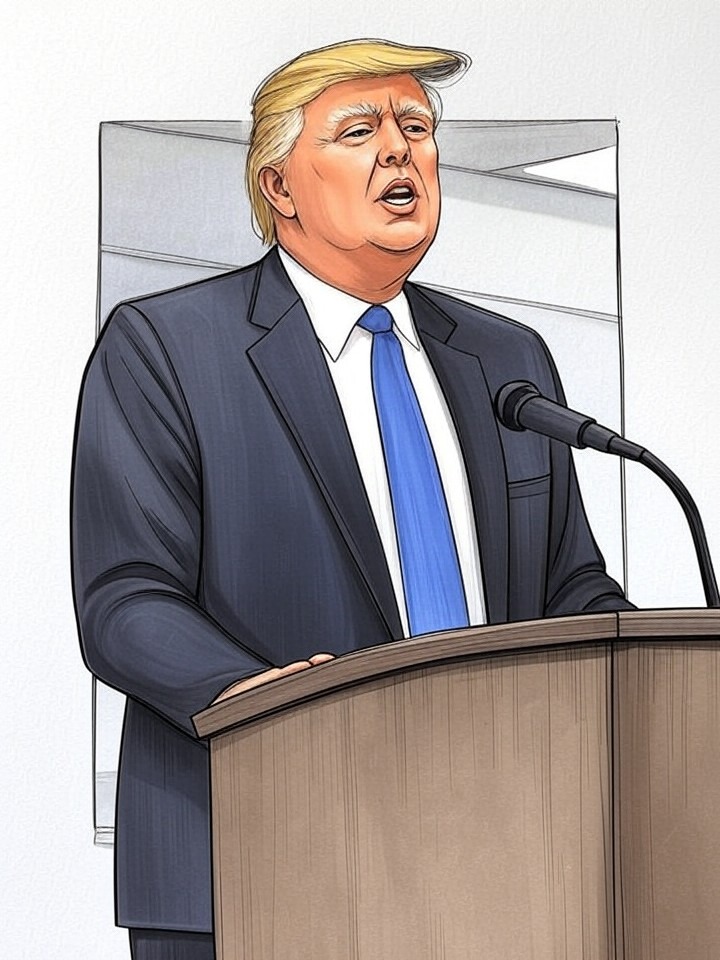
• Essential funding for national security The administration argues that a $1.5 trillion budget is necessary to navigate what President Trump describes as "troubled and dangerous times." Supporters, including Republican defense hawks like Rep. Don Bacon and Rep. Steve Womack, contend that the military has been underfunded and requires this significant increase to maintain readiness.
• Strategic expansion and revenue sources The proposal outlines a vision for a "Dream Military" funded by rising government revenue from tariffs, rather than traditional tax measures. This budget is designed to support specific high-cost ambitions, such as the "Golden Dome" air defense system, new battleship designs, and the interventionist "Don-roe Doctrine."
• Demanding contractor accountability President Trump emphasized the need for defense firms to prioritize manufacturing capabilities over financial practices like stock buybacks. He explicitly threatened to sever contracts with Raytheon if they do not comply, signaling a push for industry reforms to address delivery delays.
How it may affect me
As a U.S. reader:
Investments in defense sector stocks may experience volatility, as shares of major contractors declined following administration threats to cancel contracts over financial practices like stock buybacks.
National security strategy may shift toward increased activity in the Caribbean and high-cost projects like the "Golden Dome," funded specifically by rising revenue from tariffs.
The federal budgeting process could face significant hurdles or require party-line reconciliation, as the proposal exceeds current spending baselines and challenges parity between defense and non-defense funding.
Defense contractors may be forced to pivot their business strategies from financial buybacks to manufacturing investments to avoid losing government contracts amid demands for accountability.