
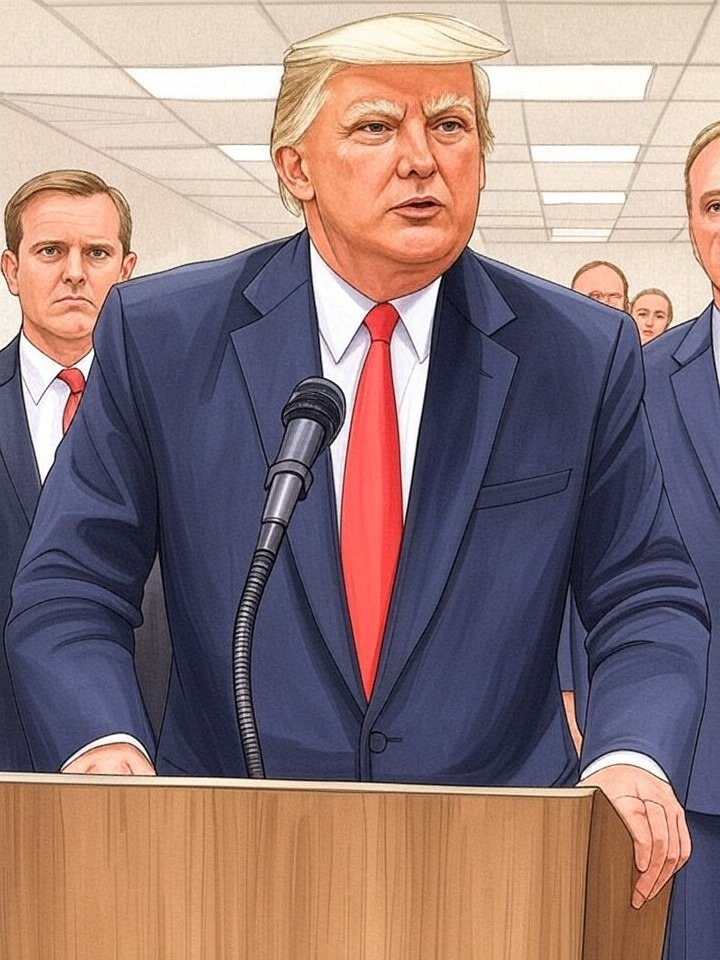
• Advocacy for aggressive interest rate reductions The President has frequently criticized current Chairman Jerome Powell and has called for interest rates to be cut to 1% to stimulate economic growth. This push for a lower rate environment comes as the White House prepares to select a new Federal Reserve chair, with candidates Kevin Warsh and Kevin Hassett emerging as primary options.
• Defense of executive tariff authority The President has described the outcome of legal challenges regarding trade duties as critical for the nation. The administration emphasizes the financial significance of these measures, with the Treasury Department reporting that tariffs generated $215.2 billion in revenue during fiscal year 2025.
• Assertion of personnel removal powers The Supreme Court is scheduled to hear arguments regarding the president's power to remove Federal Reserve officials. This review follows administration attempts to oust Governor Lisa Cook, citing allegations of mortgage fraud as the basis for the personnel action.
How it may affect me
As a U.S. reader: Borrowing costs will depend on whether the new Federal Reserve chair targets the administration's desired 1% interest rate or the market's expected 3% neutral level.
Supreme Court rulings on trade authority could affirm or eliminate tariffs that generated $215.2 billion in federal revenue last year, potentially affecting government funding sources.
The stability of U.S. monetary policy could change depending on whether the Supreme Court grants the president the legal authority to remove Federal Reserve officials at will.