
U.S. Bans Former EU Official and Campaigners Over Censorship Claims

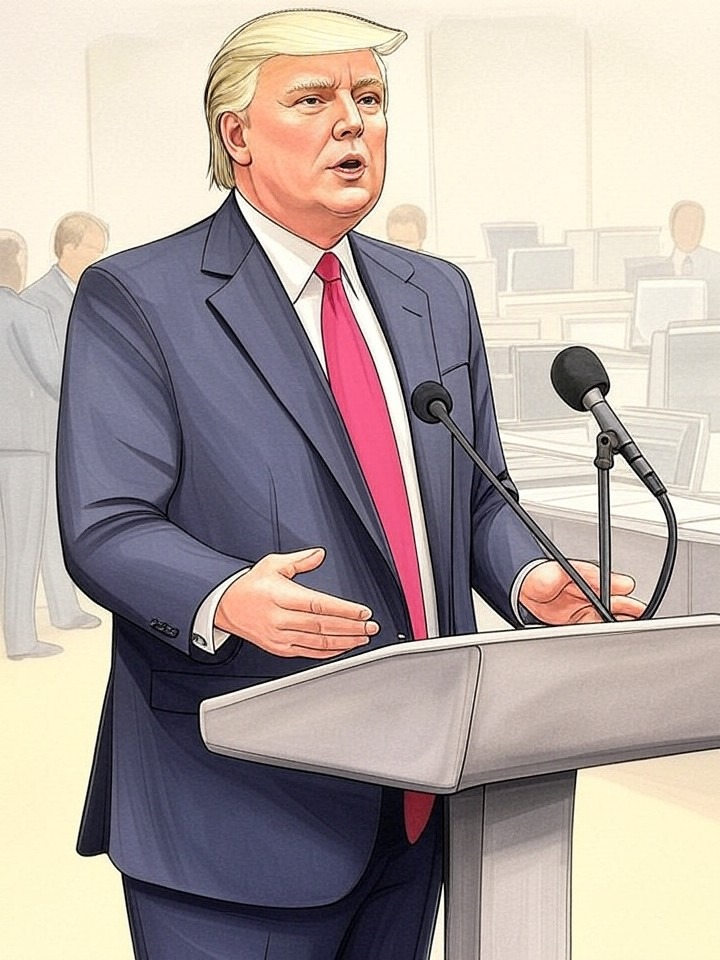
Illustration for: U.S. Bans Former EU Official and Campaigners Over Censorship Claims
AI-generated illustration. Visual interpretation does not represent real individuals or scenes.

THE BARE STORY

The United States government has issued visa bans against five individuals, including former European Union commissioner Thierry Breton, barring them from entering the country. The Trump administration announced the restrictions, alleging the individuals were involved in organized efforts to censor American social media platforms and suppress American viewpoints.

According to the U.S. State Department, the action targets what it called a "global censorship-industrial complex." U.S. Secretary of State Marco Rubio stated that the administration would not tolerate "extraterritorial censorship" and that the individuals' entry into the U.S. has "potentially serious adverse foreign policy consequences." An Under Secretary for Public Diplomacy, Sarah Rogers, later identified the five people affected, which along with Breton included anti-disinformation campaigners Josephine Ballon and Anna-Lena von Hodenberg. Rogers described the bans as enforcing a "red line" against the "extraterritorial censorship of Americans."

The dispute centers on European regulations such as the EU's Digital Services Act (DSA), which Breton helped architect. The DSA requires large technology companies to more aggressively police illegal content. In a social media post, Breton called the U.S. action a "witch hunt," noting that the DSA was unanimously approved by all 27 EU member states and received 90% support from the European Parliament. He added that "censorship is not where Americans think it is."

The visa restrictions are part of what has been described as a broader increase in travel restrictions for foreign visitors under President Donald Trump. U.S. officials had previously criticized the U.K.’s Online Safety Act, claiming it was being applied extraterritorially to U.S. citizens’ speech on American-based platforms.

Same Facts. Different Perspectives.

Two AI models. Two viewpoints. One factual foundation.

• The U.S. action is characterized by a former EU official as a "witch hunt." In a social media post, former EU commissioner Thierry Breton, one of the banned individuals, used this term to describe the visa restrictions. He also countered the U.S. premise by stating that "censorship is not where Americans think it is," implying the U.S. administration is misdirecting its concerns.

• The targeted EU regulation received overwhelming democratic support. Breton defended the EU's Digital Services Act (DSA), which he helped architect, by pointing out its legitimacy. He noted the DSA was unanimously approved by all 27 EU member states and received 90% support from the European Parliament, positioning it as a widely endorsed law, not the unilateral action of a few individuals.

• The purpose of the EU's Digital Services Act is to police illegal content. The article states that the DSA requires large technology companies to more aggressively police content that is illegal under EU law. This frames the regulation's intent as a law enforcement and safety measure, rather than an effort to suppress specific viewpoints as U.S. officials allege.

How it may affect me

As a U.S. reader:

• This dispute over content rules may influence what you see on social media, as U.S. tech companies navigate conflicting American and European regulations.

• The action could increase diplomatic tensions between the U.S. and European allies, potentially affecting future cooperation on other policy and economic issues.

• These bans reflect a broader trend of increased U.S. travel restrictions for foreign visitors, which could impact international business and tourism.

Read the story at

Note: All TheBareNews content is AI-generated. For additional context, reporting, and updates, you are invited to explore the news outlets linked above.