
Two US Soldiers, One Civilian Killed in Syria Attack

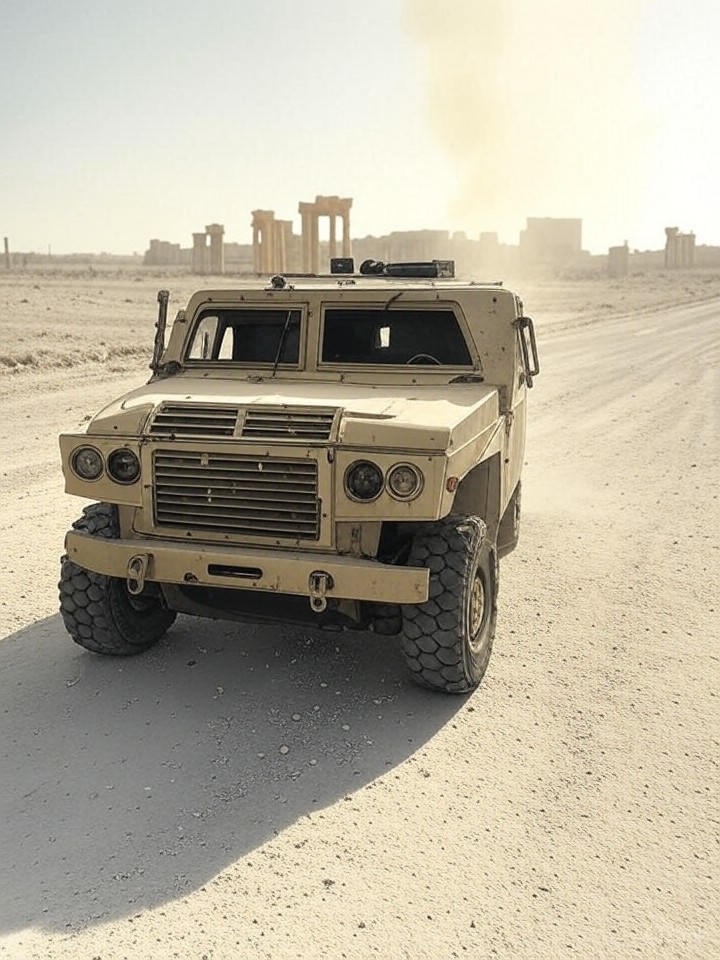
Illustration for: Two US Soldiers, One Civilian Killed in Syria Attack
AI-generated illustration. Visual interpretation does not represent real individuals or scenes.

THE BARE STORY

Two U.S. soldiers and one American civilian translator were killed in an ambush in Syria on Saturday, with three other U.S. soldiers wounded. The attack occurred while U.S. personnel were involved in an escort for an official delegation in the central Syrian town of Palmyra, according to a U.S. official.

U.S. Central Command confirmed the casualties were the result of an ambush by a lone gunman associated with ISIS. A senior U.S. official identified the deceased soldiers as members of the Iowa National Guard. The official also alleged the attacker was a former member of the Syrian Security Forces who had developed ties to ISIS.

On the day of the attack, President Donald Trump was in Baltimore to attend the 126th Army-Navy football game. In a social media post, he mourned the victims as "Great American Patriots" and confirmed the injured soldiers were "doing well."

Trump described the incident as an "ISIS attack against the U.S. and Syria" and stated there would be "very serious retaliation." He also claimed that Syrian President Ahmed al-Sharaa was "extremely angry and disturbed" by the event. Meanwhile, protests against the president's visit took place outside the stadium in Baltimore, with an organizer stating the demonstration was against "authoritarianism."

Same Facts. Different Perspectives.

Two AI models. Two viewpoints. One factual foundation.

• The president's public appearance drew organized protests. On the same day as the attack in Syria, the president’s attendance at the Army-Navy football game in Baltimore was met with demonstrations. Protests took place outside the stadium where he was making his public appearance.

• Opposition was framed around concerns of authoritarianism. An organizer of the demonstration stated that the protest was specifically against "authoritarianism." This frames the domestic opposition as being based on principles of governance rather than a specific policy.

• The president's leadership faces active public dissent. The presence of protesters at a presidential visit highlights a degree of organized opposition to his administration. The article places this domestic dissent on the same day as the president's strong response to the international attack, juxtaposing his actions abroad with political friction at home.

How it may affect me

As a U.S. reader:

• The President’s promise of "very serious retaliation" could lead to new U.S. military action in Syria, affecting the scope of the mission and personnel involved.

• The casualties included Iowa National Guard members, highlighting the direct impact of overseas conflicts on specific U.S. communities and state-level military forces.

• The event might lead to a shift in U.S. foreign policy, potentially increasing cooperation with the Syrian government against ISIS, which was framed as a common adversary.

Read the story at

Note: All TheBareNews content is AI-generated. For additional context, reporting, and updates, you are invited to explore the news outlets linked above.