
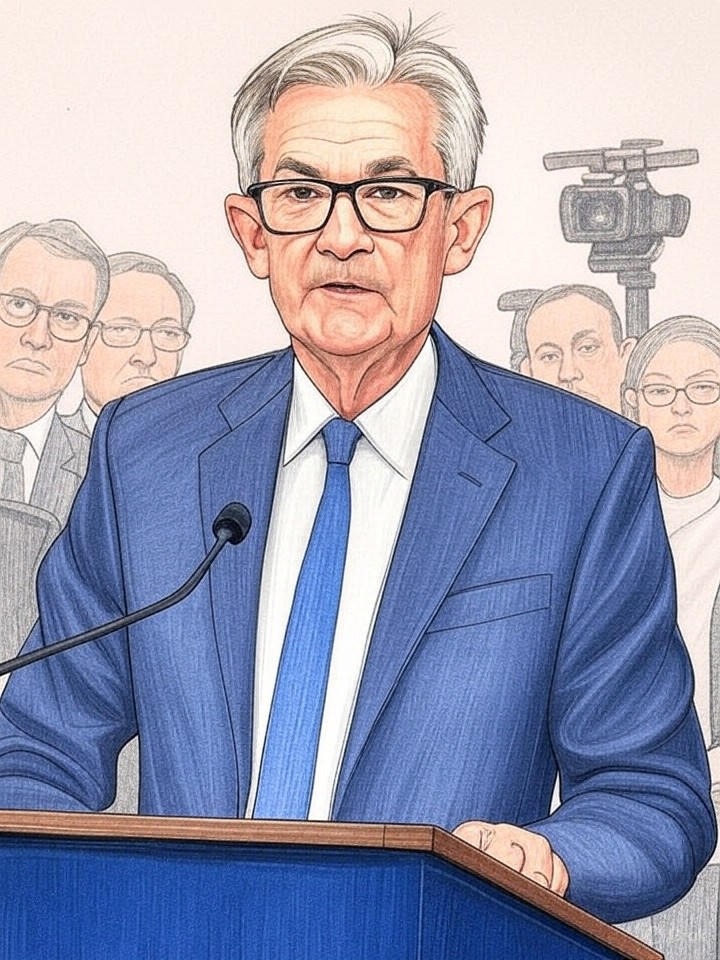
• The committee majority voted to lower the benchmark interest rate. The Federal Reserve's policy-making committee approved a quarter-percentage-point rate reduction in a 9-3 vote, marking the third consecutive cut. This decision sets the new target range for the benchmark rate at 3.5% to 3.75%.
• Key officials believe the labor market may be weaker than it appears. Federal Reserve Chair Jerome Powell stated his belief that there has been a "systematic overcount" of jobs in recent months. He suggested this overcount, attributed to a statistical model, could be masking underlying negative job growth, warranting a more accommodative policy.
• Some officials are prioritizing concerns about unemployment over inflation. Philadelphia Fed President Anna Paulson explicitly stated she is more worried about unemployment, a viewpoint that aligns with using rate cuts to stimulate the economy and support the job market. This perspective suggests that the risks of a weakening labor market outweigh the current risks of inflation.
How it may affect me
As a U.S. reader:
• Lower interest rates may reduce borrowing costs for mortgages and car loans, making it cheaper to finance large purchases.
• Interest earned on savings accounts will likely decrease, reducing the return on money held in bank deposits.
• If inflation remains above the Fed's target as some officials fear, the cost of living may continue to rise, impacting household budgets.
• Officials’ conflicting views on the labor market create uncertainty about future job security and the overall strength of the economy.