
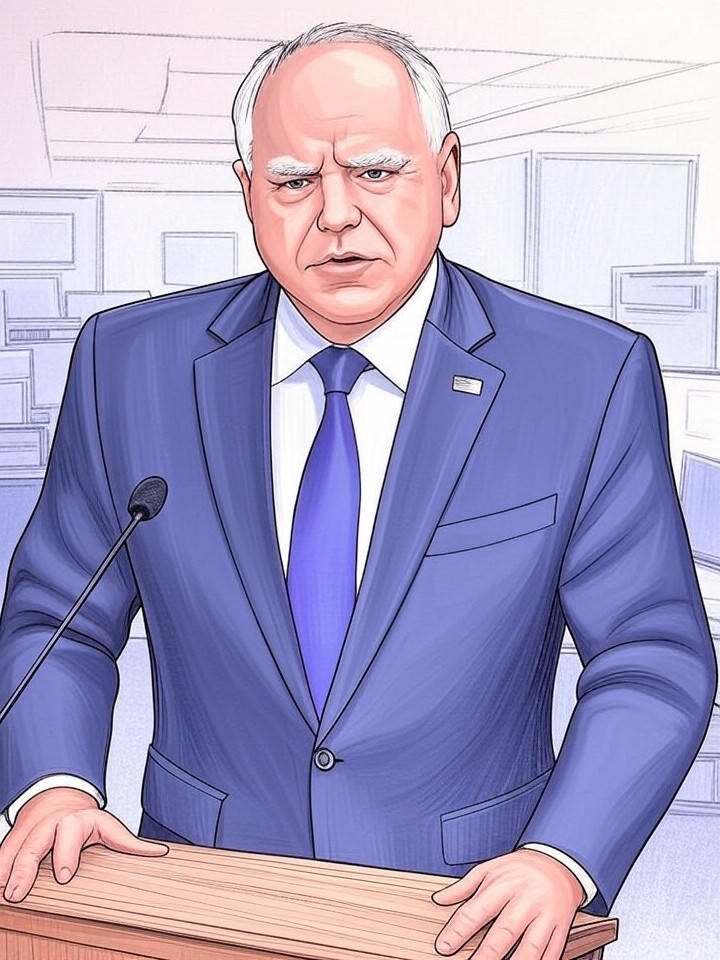
• The administration first detected and reported the fraud. Governor Walz has stated that his administration was the first to identify the fraudulent activity and subsequently reported it to federal authorities. This is supported by testimony from a Minnesota Department of Education official, who said she referred concerns about "astronomical" reimbursement claims from the nonprofit to the FBI.
• The governor is committed to ensuring accountability through federal prosecution. While taking responsibility for ensuring those involved are prosecuted, Governor Walz explained that the cases fall under federal jurisdiction because they involve federal laws. He has also characterized Minnesota as a well-run state that attracts criminals, implying the state was a target rather than an enabler.
• The governor condemns blaming the entire Somali community for the fraud. Governor Walz has pushed back against comments from former President Donald Trump regarding the Somali community, calling them "vile, racist lies." He stated that it is "lazy" and unfair to demonize an entire community based on the actions of a few individuals.
How it may affect me
As a U.S. reader:
• The loss of hundreds of millions in federal taxpayer money may lead to stricter rules and oversight for how states administer national aid programs.
• A U.S. House investigation into state-level fund management could result in new national policies for fraud prevention, affecting future government aid distribution.
• The case may influence national conversations about immigrant communities, as the involvement of some Somali individuals has become a political talking point.
• Investigations expanding into housing and other services could result in future audits or delays for recipients of those separate federal aid programs.