
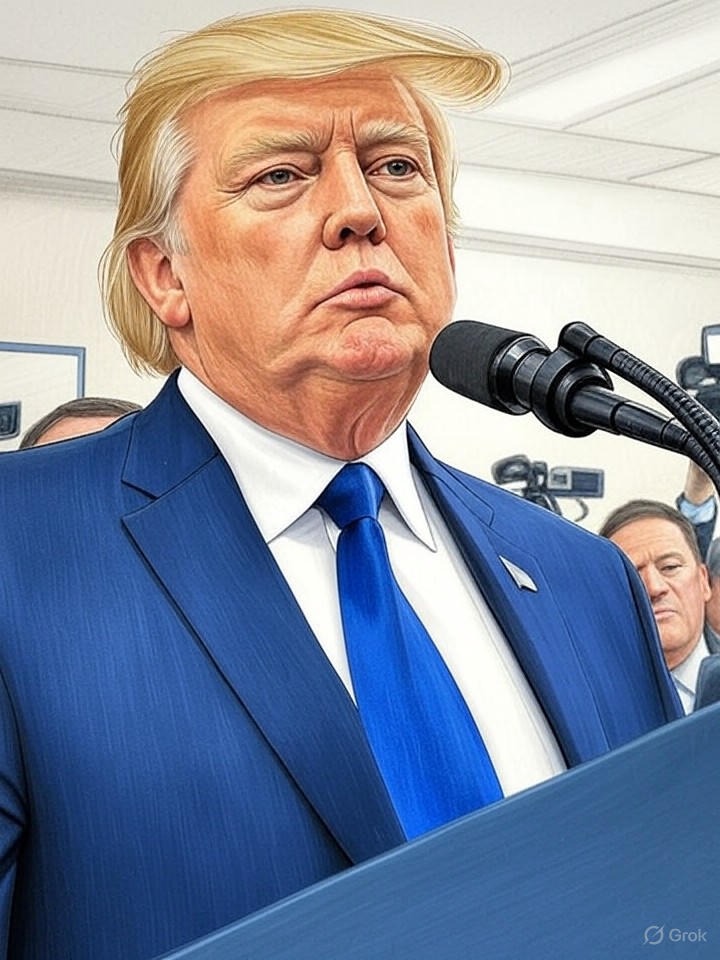
• The president believes the suspect entered the country without proper vetting. President Trump claimed that the suspect, an Afghan national, was allowed into the country "unvetted" and "unchecked." He reiterated this position during an exchange with a reporter who questioned the assertion, indicating a firm stance on the security failures he alleges are tied to the Biden administration's policies.
• The president’s communication style is characterized as frank and open. Following the exchange, White House press secretary Karoline Leavitt defended the president's remarks. According to one account, she stated that the president is "frank and honest," suggesting that reporters should view his directness and openness as a positive trait rather than an insult.
• The president directly challenged the premise of a reporter's question. When reporter Nancy Cordes questioned the president's claim about the suspect's vetting process, the president responded by asking if she was a "stupid person." This direct confrontation indicates the president's rejection of the reporter's line of questioning and the information she presented.
How it may affect me
As a U.S. reader:
• You may receive conflicting information from the White House and news media regarding the security vetting of asylum seekers, creating uncertainty about immigration facts.
• The incident could prompt reviews or changes to U.S. refugee and asylum policies, particularly concerning the vetting processes for Afghan nationals.
• The president’s confrontational style with reporters may affect public trust in the news media, with some viewing it as frankness and others as hostility.