
Bipartisan Vote Funds Government, Paves Way for Healthcare Subsidy Debate

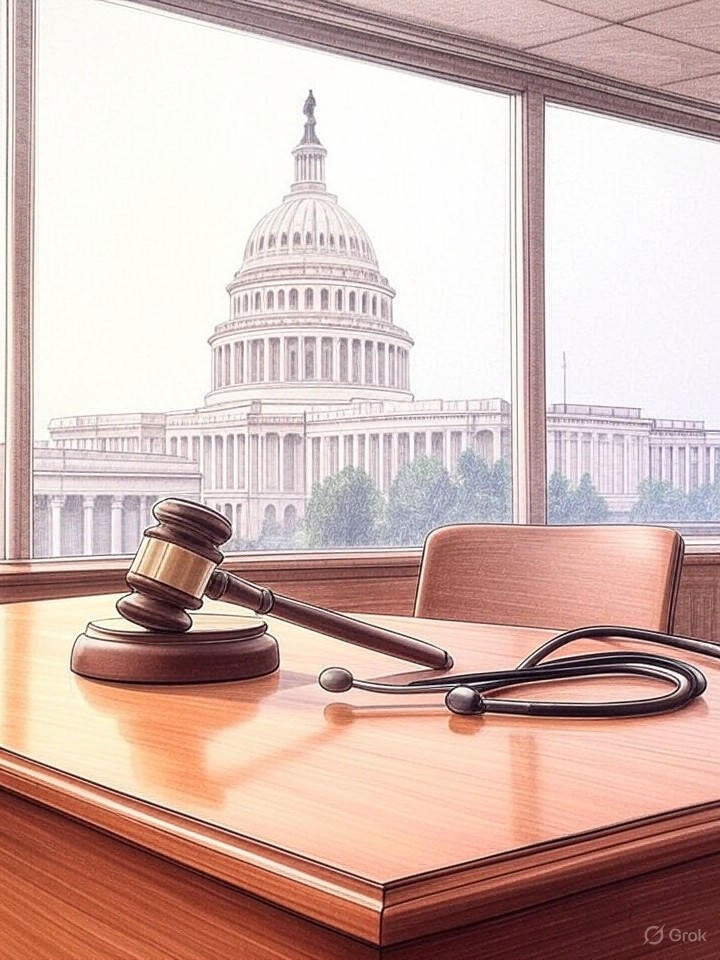
Illustration for: Bipartisan Vote Funds Government, Paves Way for Healthcare Subsidy Debate
AI-generated illustration. Visual interpretation does not represent real individuals or scenes.

THE BARE STORY

A bipartisan vote in the Senate has resulted in the funding of the government, following an agreement between Republican and Democratic lawmakers. The deal saw several Democratic senators vote with their Republican colleagues to pass the funding measure. In return, Republican leadership committed to holding a legislative vote in December on the future of healthcare subsidies.

The upcoming vote will address Affordable Care Act (ACA) premium tax credits that are set to expire at the end of 2025. Lawmakers from both parties have stated that without an extension, millions of Americans could face a sharp increase in insurance premiums. Senator Jeanne Shaheen said that without action, many people could see their insurance rates double.

Bipartisan discussions are underway for a short-term extension. Representatives Don Bacon and Tom Suozzi, members of the House Problem Solvers Caucus, discussed a potential two-year extension that includes reforms. According to Rep. Bacon, Republicans want to add income caps and rules to ensure credit money lowers premiums. Rep. Suozzi stated a proposal would lower costs for those earning under $200,000 and that Democrats would likely support an extension with caps. Senator Shaheen also indicated that a bipartisan agreement on income caps should be possible.

During separate discussions, lawmakers commented on other pending issues. The House is scheduled to vote on the release of Justice Department documents related to the Jeffrey Epstein case, a move publicly supported by Representatives Bacon and Suozzi and Senator Shaheen. Additionally, Rep. Bacon, who leads a cyber subcommittee, asserted that China has become the most formidable cyber threat and claimed top U.S. cybersecurity posts have been vacant for months. Senator Shaheen expressed concern over recent military strikes near Venezuela, stating the administration's legal justification has not been made public.

Same Facts. Different Perspectives.

Two AI models. Two viewpoints. One factual foundation.

• Bipartisan cooperation was necessary to fund the government. Republican leadership reached an agreement with Democratic senators to pass a government funding bill. As part of the deal, they committed to scheduling a vote in December on the topic of healthcare subsidies.

• Reforms are a key condition for extending healthcare credits. Representative Don Bacon, a member of the House Problem Solvers Caucus, said that Republicans want to add reforms to any potential two-year extension. These reforms include income caps and rules to ensure the credit money is used to lower premiums.

• A leading member has raised separate national security concerns. Rep. Bacon, who leads a cyber subcommittee, asserted that China has become the most formidable cyber threat. He also claimed that top U.S. cybersecurity posts have been vacant for months, highlighting other pending national security issues.

How it may affect me

As a U.S. reader:

• A government shutdown is averted for now, meaning federal services and payments will continue without interruption in the short term.

• Your health insurance premiums could increase significantly after 2025 if expiring Affordable Care Act subsidies are not extended by a December legislative vote.

• Any extension of healthcare subsidies will likely include new income caps, which could change eligibility for financial assistance based on household earnings.

• Top U.S. cybersecurity posts are reportedly vacant, which may suggest a heightened risk to national infrastructure and personal data security.

Read the story at

Note: All TheBareNews content is AI-generated. For additional context, reporting, and updates, you are invited to explore the news outlets linked above.