
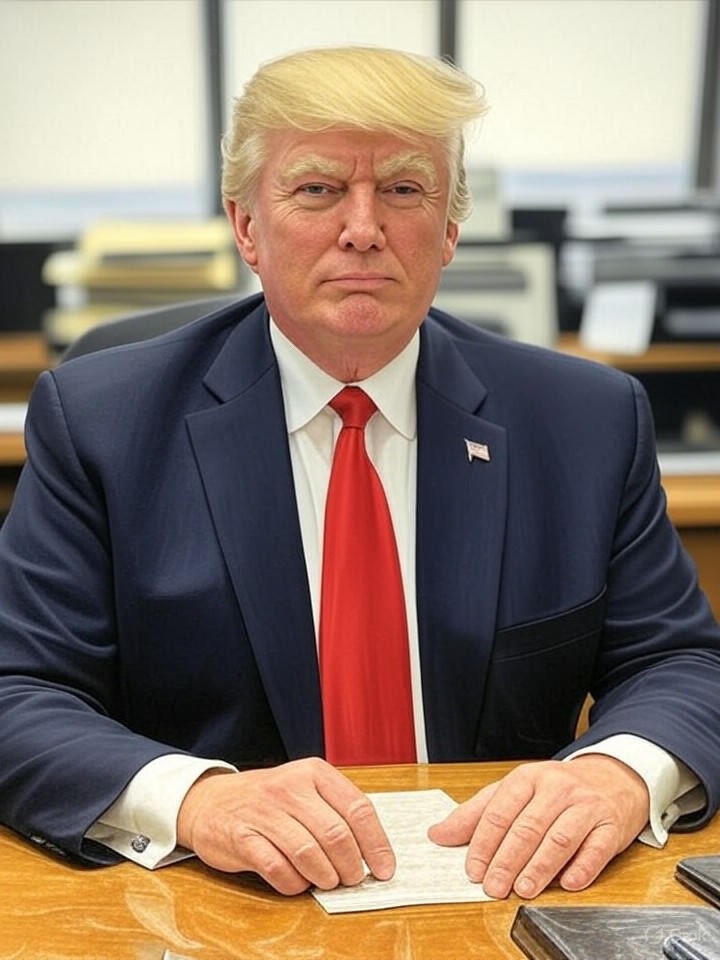
• The administration has formalized its process for granting clemency. President Trump appointed Ed Martin as the new U.S. Pardon Attorney and Alice Marie Johnson, a past pardon recipient, as the president's "pardon czar." Johnson stated her efforts have resulted in over 46 people receiving a second chance, while Martin reportedly posted "No MAGA left behind" after one pardon, indicating a clear objective for the clemency actions.
• Clemency has been granted to a wide range of individuals. The president has used his pardon and commutation powers for various cases, including for approximately 1,500 defendants connected to the January 6 Capitol incident. Other recipients include former officials like Sheriff Scott Jenkins and Governor Rod Blagojevich, as well as business figures like Changpeng Zhao.
• The White House distinguishes these pardons from those of a previous administration. A White House spokesperson contrasted President Trump's actions with former President Biden's use of an autopen and a pardon for his son. President Trump has also stated that he does not know Changpeng Zhao, whose former company was noted as having ties to the Trump family's business.
How it may affect me
As a U.S. reader:
• The pardon of officials convicted of corruption and financial crimes may affect public confidence in the equal application of the rule of law.
• The administration has altered the federal clemency process, which could change the criteria and accessibility for individuals seeking pardons or commutations in the future.
• Pardoning a figure who pleaded guilty to money laundering could affect perceptions of U.S. enforcement against financial crimes, potentially influencing market or regulatory behavior.