
Trump Directs Military to Prepare for Possible Action in Nigeria

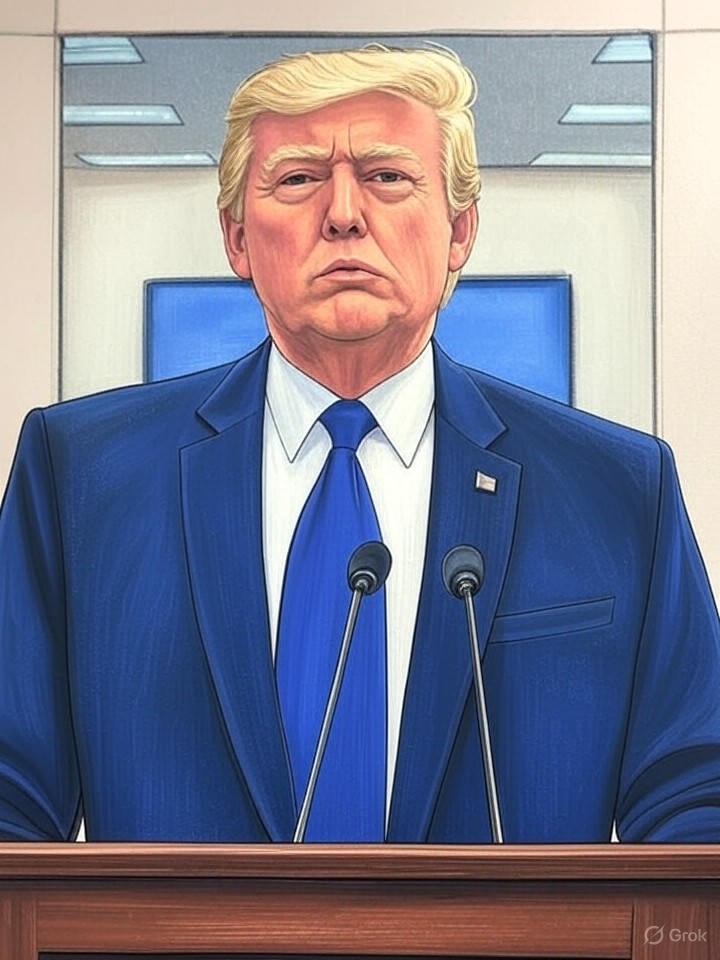
Illustration for: Trump Directs Military to Prepare for Possible Action in Nigeria
AI-generated illustration. Visual interpretation does not represent real individuals or scenes.

THE BARE STORY

President Donald Trump has announced that he instructed the Pentagon to prepare for potential military intervention in Nigeria. The stated purpose of the possible action is to stop attacks against Christians, which the president described as a "mass slaughter." Trump also called for a halt to foreign aid to the country.

In a video announcement on Wednesday night, President Trump warned the Nigerian government that the U.S. may take action if the violence does not stop. He described a potential American military response as "fast, vicious, and sweet."

The announcement comes as advocacy groups and officials raise alarms about the violence. According to the Nigerian-based International Society for Civil Liberties and Rule of Law, more than 7,000 Christians were killed in the country in the first seven months of this year. Brian Burch, the U.S. ambassador to the Holy See, stated that Christians are being "slaughtered by the thousands" by what he termed "radical Islamic extremists." Two survivors of a 2014 Boko Haram school kidnapping have also become advocates for religious freedom and previously met with the president.

One source report noted that the conflict in the region involves complex factors, including competition over land and long-standing ethnic and religious tensions. The same report indicated that the Nigerian government has limited control over its hinterlands and that past foreign interventions in the region have struggled to stop the violence.

Same Facts. Different Perspectives.

Two AI models. Two viewpoints. One factual foundation.

• The conflict involves more than just religious persecution. One report cited in the article notes that the conflict has complex origins, including competition over land and long-standing ethnic tensions, in addition to religious factors. This suggests that a purely military approach aimed at stopping religious violence may not address the root causes of the instability.

• The Nigerian government has weak control over the affected areas. The same report indicated that the Nigerian government possesses "limited control over its hinterlands," which are the regions where much of the violence is occurring. This reality could complicate a foreign military intervention and make it difficult to achieve a lasting resolution.

• Past foreign interventions in the region have a history of failure. The article notes that previous attempts by foreign powers to intervene in the region have struggled to be effective. This historical precedent suggests that a new intervention may face similar challenges and might not succeed in stopping the violence.

How it may affect me

As a U.S. reader:

• U.S. tax dollars may be used to fund a potential military intervention. A halt in foreign aid could also alter federal spending.

• U.S. service members could be deployed to Nigeria, facing risks in a conflict where past foreign interventions have struggled to be effective.

• The directive signals a potential shift in U.S. foreign policy, though the ultimate impact is unclear as no military action has been taken.

Read the story at

Note: All TheBareNews content is AI-generated. For additional context, reporting, and updates, you are invited to explore the news outlets linked above.