
Two Arrested in Connection with Harvard Medical School Explosion

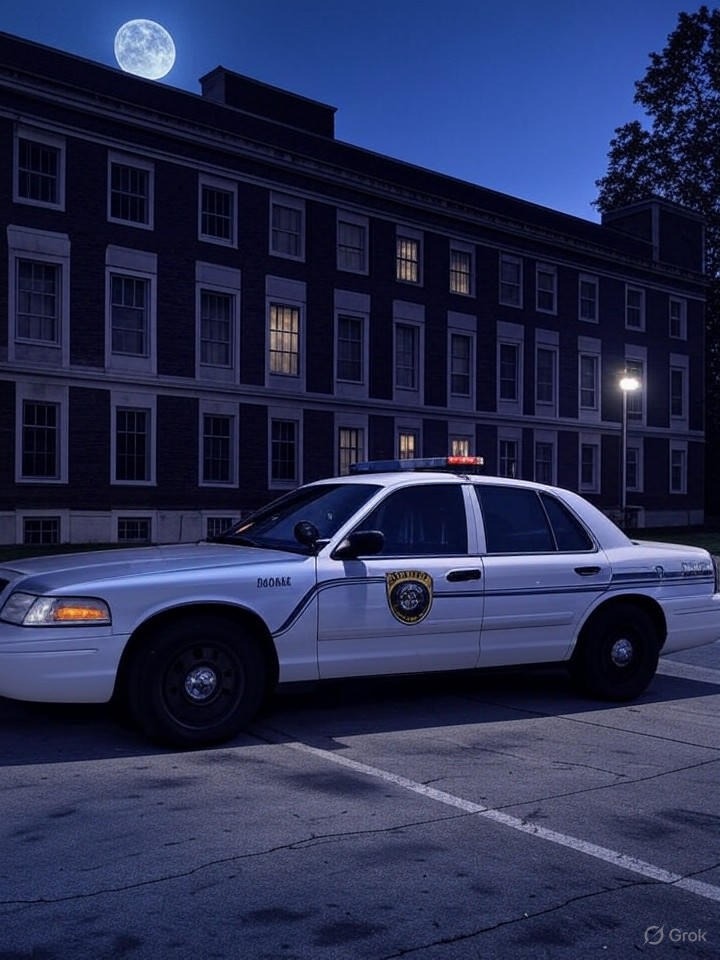
Illustration for: Two Arrested in Connection with Harvard Medical School Explosion
AI-generated illustration. Visual interpretation does not represent real individuals or scenes.

THE BARE STORY

Federal authorities announced on Tuesday the arrests of two men in connection with an explosion at Harvard Medical School in Boston. The FBI identified the individuals as Logan David Patterson, 18, and Dominique Frank Cardoza, 20. The arrests were made by the FBI's Boston Joint Terrorism Task Force with assistance from the Harvard University Police Department (HUPD).

The incident occurred on Saturday, November 1, shortly after 2:45 a.m. in a fourth-floor hallway of the Goldenson Building. According to the special agent in charge of the FBI in Boston, the explosion was caused by a Roman candle firework. The agent alleged that the pair boasted about the act and attempted to cover it up. No one was injured in the blast.

Following the incident, university officials said an HUPD officer saw two masked suspects fleeing the building, and police later released surveillance photos. The Boston Fire Department Arson Unit’s initial assessment concluded that the explosion appeared to be intentional and involved a single device.

University officials stated that the building did not sustain any structural damage and that all labs and equipment were intact. The area has since been cleared and is fully operational. While the campus was declared safe for students and faculty to return, the university said HUPD will maintain an increased presence as the investigation continues.

The FBI Director, Kash Patel, praised what he called a coordinated operation and credited the arrests to counterterrorism policies.

Same Facts. Different Perspectives.

Two AI models. Two viewpoints. One factual foundation.

• The explosion caused no injuries and no structural damage to the building. The article explicitly states that no one was injured in the blast. University officials also confirmed that the Goldenson Building did not sustain any structural damage, and that all labs and equipment inside were found to be intact.

• The device used was identified as a common firework. The special agent in charge of the FBI in Boston stated that the explosion was caused by a Roman candle firework. This identifies the source of the blast not as a sophisticated explosive but as a commercially available pyrotechnic device.

• The affected area was quickly restored to normal use. Following the event, the area of the explosion was cleared and is now described as "fully operational." University officials declared the campus safe, allowing students and faculty to return and signaling a swift end to the disruption.

How it may affect me

As a U.S. reader:

• Federal counterterrorism resources may be used to investigate local incidents, even those with no injuries and involving common items like fireworks.

• The incident may lead to increased security on university campuses, potentially affecting the daily environment for students, staff, and visitors.

• The response demonstrates that intentional acts, regardless of the device or damage, can be investigated as serious security matters by federal law enforcement.

Read the story at

Note: All TheBareNews content is AI-generated. For additional context, reporting, and updates, you are invited to explore the news outlets linked above.