
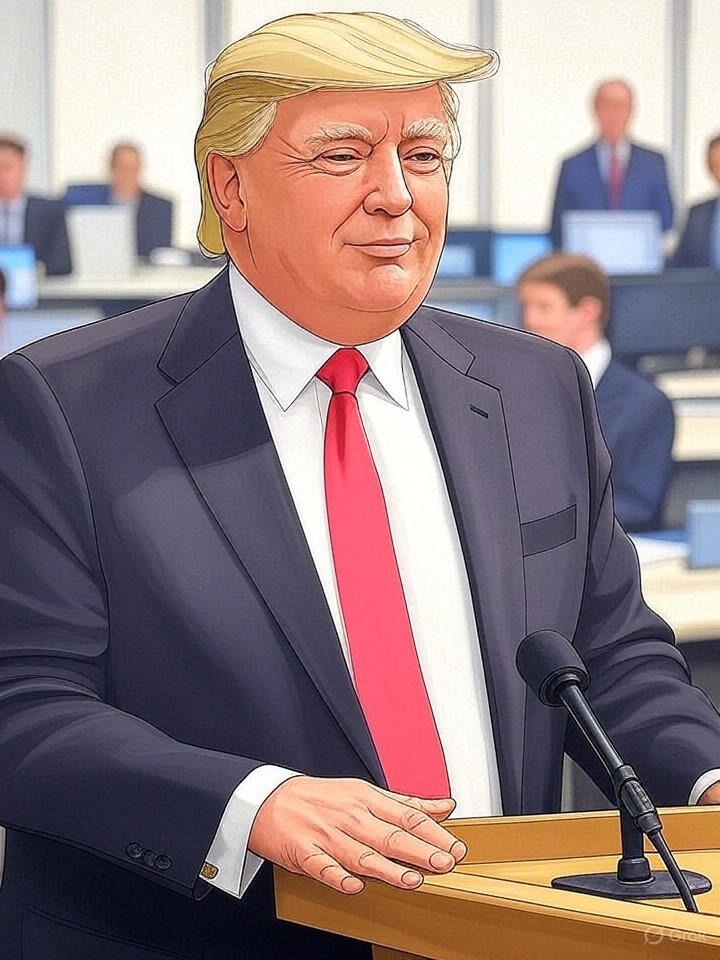
• The president is deliberately withholding strategic plans. In an interview, President Trump declined to specify a potential U.S. response to military action against Taiwan, justifying his refusal by stating, "I can't give away my secrets." This frames the lack of public detail as a calculated move to maintain a strategic advantage.
• The administration believes China is already aware of the consequences. The president asserted that Chinese officials "know the consequences" of taking military action. This suggests that the U.S. position has been communicated effectively behind the scenes, making a public declaration unnecessary.
• An understanding with Chinese leadership has reportedly been reached. According to one summary of the interview, President Trump claimed that President Xi and his officials have said they would not move against Taiwan during his time in office. This indicates a potential high-level assurance that may reduce the immediate threat.
How it may affect me
As a U.S. reader:
• The unstated U.S. policy on Taiwan creates uncertainty about future American military involvement in a potential conflict between China and Taiwan.
• A reported assurance from Chinese leadership may signal reduced short-term conflict risk, but the long-term U.S. commitment remains publicly ambiguous.
• The ambiguity of the U.S. response may affect planning for American businesses with supply chains in the region due to unclear geopolitical risk.